
In short. Send the exact wording, the size you have in mind and where the plaque will be mounted. We send a drawing with the layout, finish and mounting for your sign-off.
Price indications
| Style | Example size | Price |
|---|---|---|
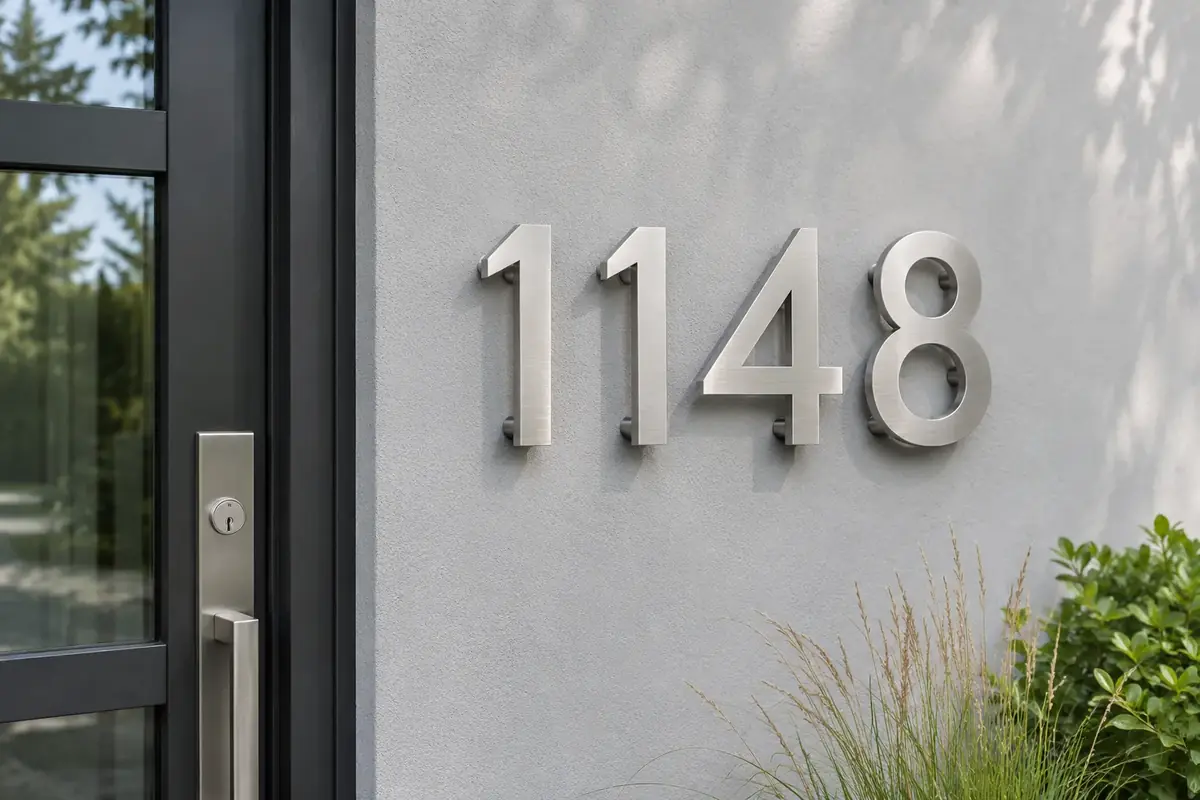
| Flat-cut letters or address numbers, acrylic or stainless | up to 5 ft line, 4 to 6 in tall | from USD 400 |
Supplied and delivered in Washington State, including import duty. Before sales tax. Installation, electrical connection, permits and shop drawings are extra. Your firm price is confirmed with your quote. Prices updated November 2026.
Types
- PL-1 Plaques and house numbers. Etched and engraved plaques and building numbers.
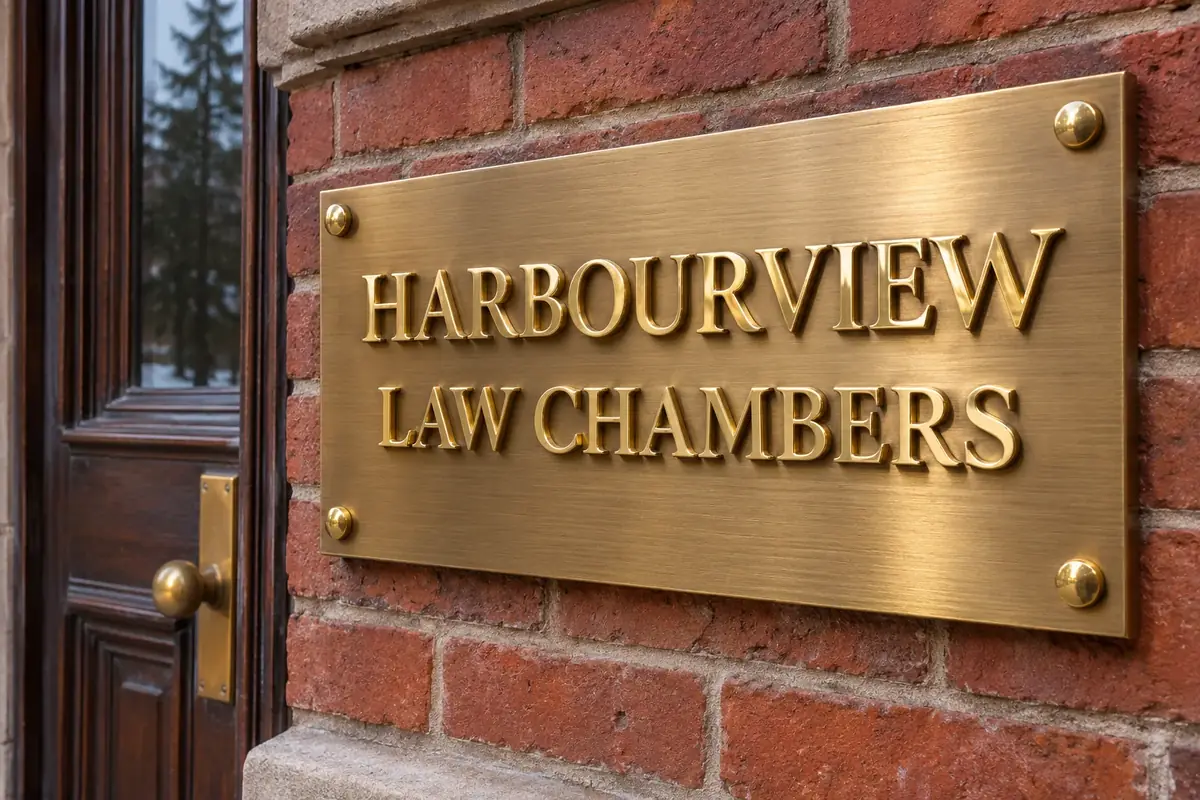
- PL-2 Relief door plaques. Raised letters and logos for building and office entrances.
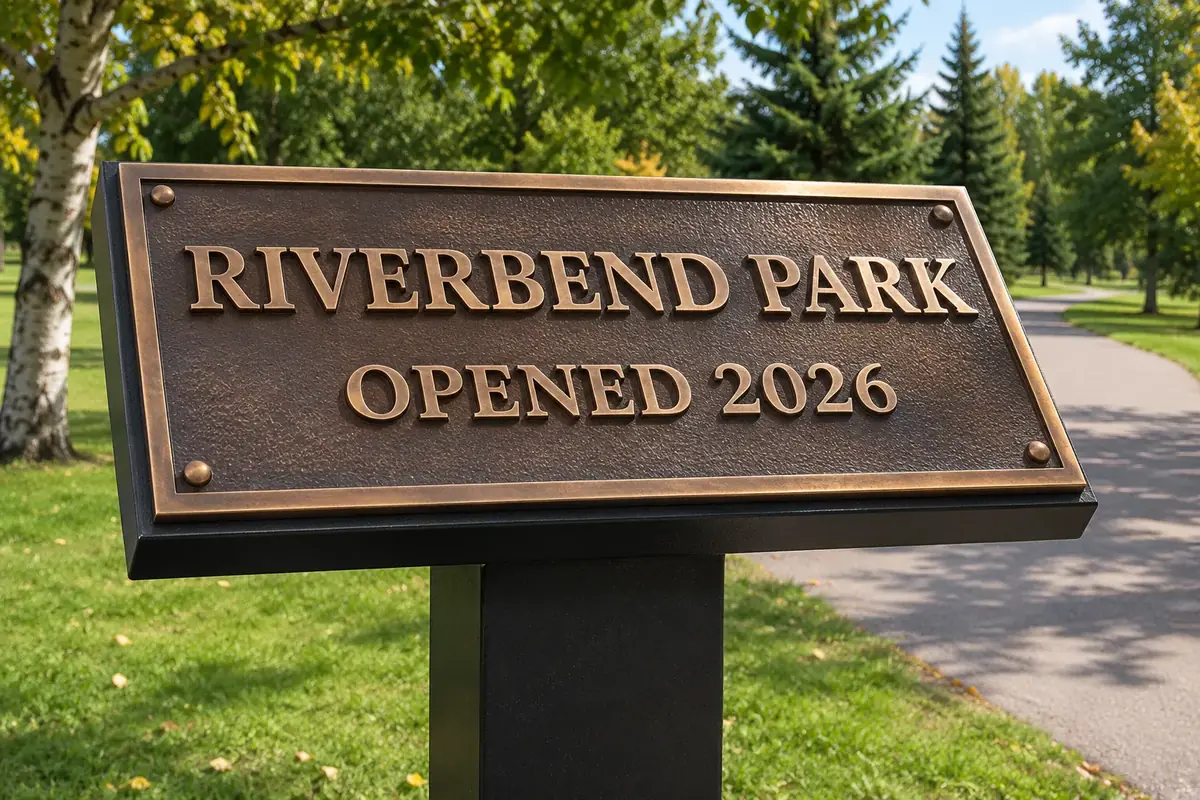
- PL-3 Commemorative and memorial plaques. Dedications, building openings, donor recognition and park plaques, wall or pedestal mounted.
What to send
- The exact wording, checked for spelling and dates.
- Any logo or crest, ideally as a vector file.
- Approximate size and where it will be mounted: wall, door, post or pedestal.
- Quantity, for example one plaque per door.
How it works
- Brief. Send what you have: photos, rough sizes, a sign schedule or a drawing package.
- Drawing and firm price. We send a drawing with sizes, materials and mounting, and a firm price in US dollars for your sign-off.
- Fabrication. Built to the approved drawing. Simple signs take about 3 to 4 weeks; complex projects can take up to 3 months.
- Delivery and installation. One-stop service. We apply for the sign permit, professional engineers we work with in Washington State prepare stamped drawings when the city asks for them, and installation plus the electrical connection for lit signs, by a licensed electrician we have worked with in Washington State, are done in one visit. Each item is priced in your quote, and supply only is available.
Choosing and proofing a plaque
Cast or engraved plaques for a dedication, donor wall or office entrance
Casting builds relief into a plaque. The letters, border and emblem can stand proud of a textured background. Engraving cuts a design into the face of a prepared material. Those processes give a name a different presence in the hand and a different appearance on the wall.
Let the inscription choose the process
For a park dedication with a short title, a date and a crest, a cast plaque can give the title depth and the crest a sculptural quality. For a professional office with several lines of small names, an engraved plate may suit the finer typography. The material, fill color, finish and letter size still matter. Ask to see a physical example close to the scale of your smallest line.
A coat of arms needs more scrutiny than a simple border. Supply the approved artwork and ask the maker to highlight details that will merge at finished size. Someone reviewing an enlarged PDF can easily approve lines a visitor will never see.
Plan for the next name
If donors will be added each year, look at a permanent header with separate replaceable plates. One new name can then be fitted without remaking the whole dedication. Price flat-cut address numbers, engraved plates and cast bronze plaques as separate products. Their costs follow different processes and cannot be inferred from one another.
How to proof a dedication plaque before it becomes permanent
Read the names aloud, one at a time, from the final artwork. A committee can spend an afternoon choosing a border and still miss a misplaced accent in the name of the person being honoured. Give the wording its own approval step.
Proof the words in three passes
First, compare every name and title against an authoritative list supplied by the organizer. Confirm family preferences for initials, honorifics and accents where appropriate. Second, check dates and exactly what each date means. A building’s opening date and a later rededication date are both plausible, but they tell different stories. Third, read the inscription in layout order, including line breaks, logos and the relationship between a dedication and its sponsor credit.
For multilingual text, have an appropriate speaker review the final arranged artwork. Copying approved text into a design can change punctuation or break a name across lines.
Make approval unambiguous
Print the layout at actual size. Look at the smallest name from the planned reading position, including the effect of the mounting height or a sloped pedestal. Designate one person to send a dated approval identifying the exact file revision. If a single letter changes afterwards, circulate a new complete proof. The fabricator should have one unmistakable version to produce.
Questions
How much does a set of flat-cut letters or address numbers cost?
Flat-cut letters or address numbers, acrylic or stainless (up to 5 ft line, 4 to 6 in tall): from USD 400. Supplied and delivered in Washington State, including import duty. Before sales tax. Installation, electrical connection, permits and shop drawings are extra. Your firm price is confirmed with your quote. Prices updated November 2026.
Can you match existing plaques in our building?
Send photos and sizes of the existing plaques and we match them on the drawing for your approval.
What is the difference between a cast plaque and an engraved plaque?
A cast plaque is formed in a mould and can incorporate raised lettering, borders and relief. An engraved plaque has lettering or artwork cut into a prepared surface. Compare samples at the actual size of the smallest names, particularly for donor lists, dedications and detailed crests.
What should we proof before ordering a dedication plaque?
Approve every name, accent, title, date, line break and logo against a single master copy. Print the artwork at full size so the smallest inscription can be checked at the intended viewing distance. Assign one person to issue dated written approval before production.